




Blog: Google Is Killing Display. That’s Good News for Your Budget.


Key Takeaways
- Google is retiring the standalone Display campaign type.
The announcement came in May 2026, the campaign migration tool is already live in Google Ads. January 2027 is the date when you can no longer create new Display campaigns. - The Google Display Network becomes a placement inside Demand Gen rather than a campaign type of its own.
The two million-plus sites, apps, and videos are still available placements, but the targeting method has shifted with Demand Gen. - Buying display inventory now means audience-based targeting instead of placement curation.
You point the system at the people likely to convert rather than at the sites you want to show up on.
Table of Contents

Google is retiring the standalone Display campaign. Announced in June 2026, a migration tool moves existing Display campaigns into Demand Gen, and by 2027 the standalone campaign type is gone for good. The Google Display Network itself stays intact, all two million-plus sites, apps, and videos of it, but it stops being its own campaign and becomes one inventory channel inside Demand Gen.
Most news coverage is treating this as a loss of control. For the average advertiser, it’s closer to an upgrade, because the control you’re losing was control over a network that was wasting a chunk of your budget anyway.
What’s actually changing
The Google Display Network (GDN) inventory isn’t going anywhere. What’s going away is the workflow where you build a Display campaign and hand-pick the placements it runs on. With Demand Gen campaigns, Google leans on Gemini to find the people most likely to act and serves them across the same network, alongside YouTube, Discover, Gmail, and now Maps. Collapsing Google Display Network into Demand Gen shifts the orientation from where the ad runs, to who sees it.
Your access to the network is intact. Only the campaign shell around it changed. Placement exclusions still work, and channel-level reporting gives you cleaner visibility into how the Google Display Network performs against the other surfaces than standalone Display ever did. You also pick up tools the Google Display Network never had: lookalike segments for prospecting, carousel and expanded video formats, and generative creative. If you want to stay GDN-only, channel controls inside Demand Gen let you do that (but we wouldn’t recommend it).
Why losing display ad placement control is mostly a gift
Hand-picking Display placements always felt like control. In practice it was a part-time job spent fighting a network that defaulted to junk. Standalone Display was notorious for made-for-advertising sites, cheap clicks that never converted, and bot traffic that inflated every metric except revenue. You could prune placement lists every week and still bleed budget into inventory that was never going to produce a customer.
Audience-led targeting changes the job for marketers. Instead of curating where the ad shows up and hoping the right audience follows, you point the system at the people likely to convert and let it find them across the network. For most accounts that beats manual placement curation, because the algorithm now optimizes toward the outcome while you were previously optimizing toward a proxy for it.
The performance case for leaning into Demand Gen campaigns
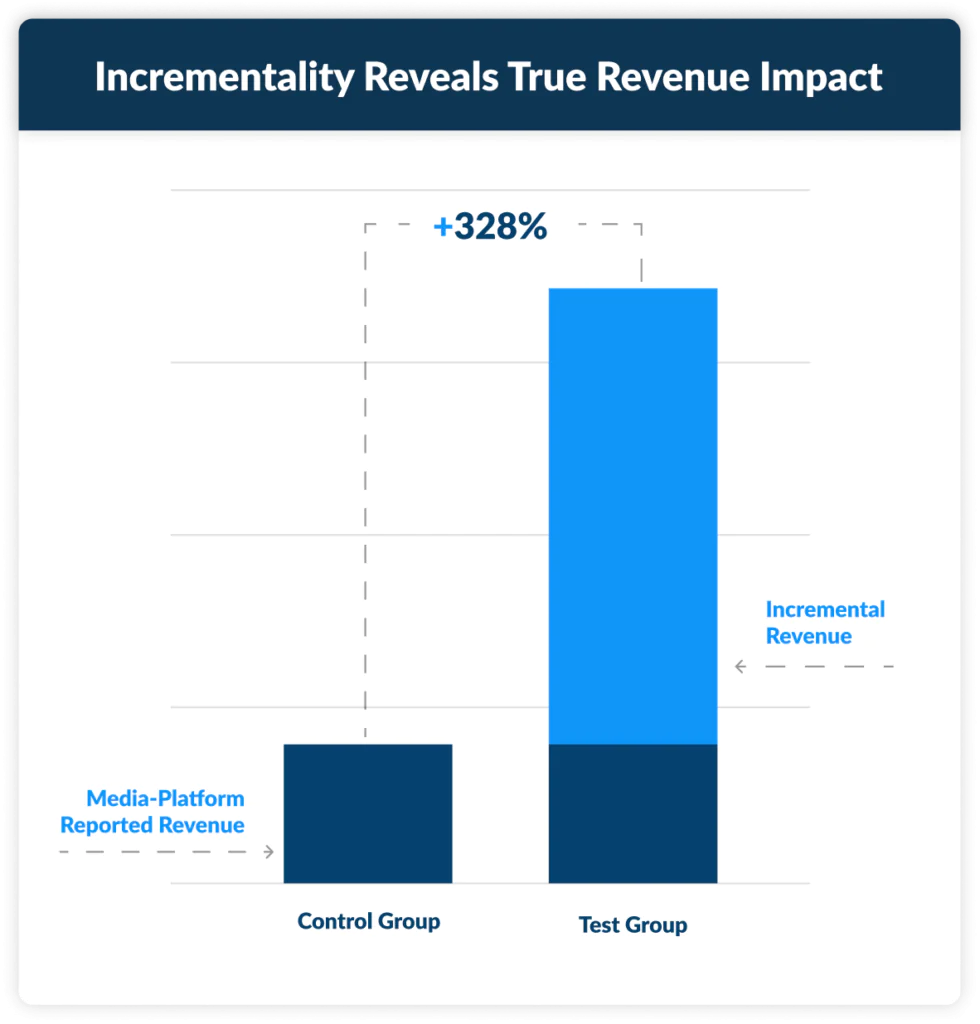
In Silverback’s incrementality tests, Demand Gen has delivered as much as 6x ROAS, often 2-3x more ROAS than Google attributes to Demand Gen campaigns in-platform.
A channel that looks mediocre on platform-reported numbers can be one of the strongest performers in the account once it’s measured against incrementality. Plenty of advertisers were ready to cut Demand Gen on its reported ROAS, the same way they would have cut a weak-looking standalone Display report. Folding Google Display Network into Demand Gen pushes more budget toward a campaign type that tends to be undervalued by the reporting most teams still rely on. If you’ve built any kind of incrementality testing into your measurement, this migration works in your favor.
The catch: Demand Gen campaigns only pay off if you stay involved
Demand Gen rewards advertisers who keep doing the unglamorous optimization and signal cleanup work and punishes the ones who treat it as set-and-forget. To be successful you must:
- Keep your placement exclusion lists clean and current, because brand-safety and junk-placement risk didn’t vanish when the campaign type changed to Demand Gen.
- Watch the channel-level placement reports for where spend is actually landing.
- Monitor for bot and low-quality traffic the same way you always should have on the Google Display Network.
- Resist the auto-upgrade button on day one.
Our recommendation for navigating the Google Display Network (GDN) to Demand Gen migration: Build a fresh Demand Gen campaign with channel controls set to GDN, run it alongside your existing Display campaign, and compare them on incremental outcomes before you commit. While you’re at it, audit your creative, because Demand Gen’s feed and video surfaces expect high-resolution imagery, multiple aspect ratios, and short-form video. Static banners alone will hold you back.
Take the upgrade
The migration is happening on Google’s timeline whether or not you like the new interface. Use the transition period as an opportunity to familiarize yourself with the power (and limitations) of Demand Gen for your brand.
In reality, Google is retiring a campaign type that most advertisers had already outgrown, and your budget is better off for it.
Want some fresh eyes on your campaigns as you make the switch to Demand Gen campaigns? Contact us and our team can provide a tailored roadmap for your business.
Frequently Asked Questions
How do Demand Gen campaigns work?

You give Google audience signals, creative assets, and a conversion goal, and it decides who sees the ad across the Google Display Network, YouTube, Discover, Gmail, and Maps. Instead of choosing placements, you're choosing who you want to reach and letting the system find them wherever they are. That means your audience definitions and your creative are doing the work that manual placement lists used to.
Are display ads still a viable format?
Yes, but not as a volume play. Display works when it's expanding an audience that search can only harvest from, and it fails when it's judged on last-click conversions it was never going to win. Most advertisers who wrote display off did so on reporting that couldn't see what it was doing.
How do I know whether display campaigns are actually driving revenue?
Not from the platform's conversion column. Run an incrementality test: hold spend steady in one set of markets, cut it in a comparable set, and watch what happens to revenue in each. The difference is what the channel is genuinely producing. Every attribution model is biased toward channels that get a click, and display rarely does.